Over the last few years, we’ve seen amazing growth in some applications of atom probe for more sensitive materials. Many of the most interesting atoms just can’t sit still; I am talking about the diffusion of hydrogen, migration of lithium or hydrated phases that dry and/or vanish; or biological specimens that lose their native state. For years, these realities placed constraints on what could be extracted from these new applications.
Enter cryogenic Atom Probe Tomography (cryo-APT): a transformative set of workflows designed to preserve native states and stabilize volatile species from sample preparation through analysis. Cryo-APT isn’t just “APT, but colder.” It’s changing how we prepare, transfer, and measure specimens that are sensitive to thermal, chemical, or environmental exposure. Cryo approaches are rapidly becoming essential across energy materials, metallurgy, and life sciences.
In recent years, the adoption of cryo specimen prep and transfer has been astonishing and led to some really unique applications. For example, biological studies of sheep bone reformation [1], corroded glass in liquid [2] hydrogen [3], and limiting specimen preparation damage [4] to name just a few. The same processes generally cover vacuum transfer as well; in that case, the process is similar without the need for a cold stage in the FIB and a liquid nitrogen cooled transfer suitcase.
Why does this matter?
Specimen preparation at ambient conditions can inadvertently alter the material you’re trying to measure. The culprits vary:
-
Hydrogen mobility: Elevated tip temperatures, especially during FIB milling, can redistribute hydrogen, altering the true microstructural picture.
- Lithium volatility: Reactive battery chemistries can migrate or react with residual gases, and move around.
- Hydration and organics: Removing moisture or exposing biomineral interfaces to vacuum without thermal control can collapse structure or drive phase transformations.
- Metastable phases: Alloys with delicate precipitates or interfacial chemistries may undergo diffusion or coarsening before you even load the specimen.
Cryogenic workflows address these risks by lowering the thermal energy available for reactions and diffusion. The result is that you can “freeze in” the material’s native state long enough to perform an accurate measurement. Practically, this means cryo is not just a temperature level, it’s a chain of custody for sensitive atoms, locking in what you put there. Typically deuterium is used to serve as a marker atom to study how hydrogen interacts with materials. I’d like to break down some of the opportunities and challenges of cryo specimen prep for atom probe into a couple different steps, both prep and transfer.
Cryogenic Preparation
Many of our customers have pioneered both electropolishing and FIB-based methodologies for specimen preparation under cryogenic conditions. Electropolishing can be done under cryogenic conditions, and modern FIB equipment can be equipped with cold stages that allow for liftout and sharpening workflows [5]. One key piece of cryo workflows are to find alternate methods for welding/brazing steps using the gas injection systems (GIS), which will uncontrollably condense over the entire sample instead of targeted regions when the sample is cooled.
One way to mitigate this is to use “redeposition welding” by making a series of small cuts at the interfaces that need to be attached, i.e. the chunk to the microtip post [3], rather than using the GIS. While time consuming, this can be effective. Another alternative is to conduct electropolishing under cryo conditions, typically in a glovebox. This also allows for deuterium charging of metals for important studies such as hydrogen embrittlement [6].
For the easy and fun part: Cryogenic Transfer
CAMECA has worked hard to enable cryo workflows, one key piece of a successful cryo transfer is to avoid opportunities for the sample to develop frost/ice crystals which will limit the ability of sample to be analyzed. Thus, having ultra-high vacuum (UHV) conditions in the transfer path from FIB/glovebox to analysis chamber is critical.
CAMECA has partnered with Ferrovac to offer the vacuum cryo transfer module (VCTM) that provides an actively pumped UHV transfer chamber at cryo conditions. Figure 1 shows a VCTM connected to a LEAP system.
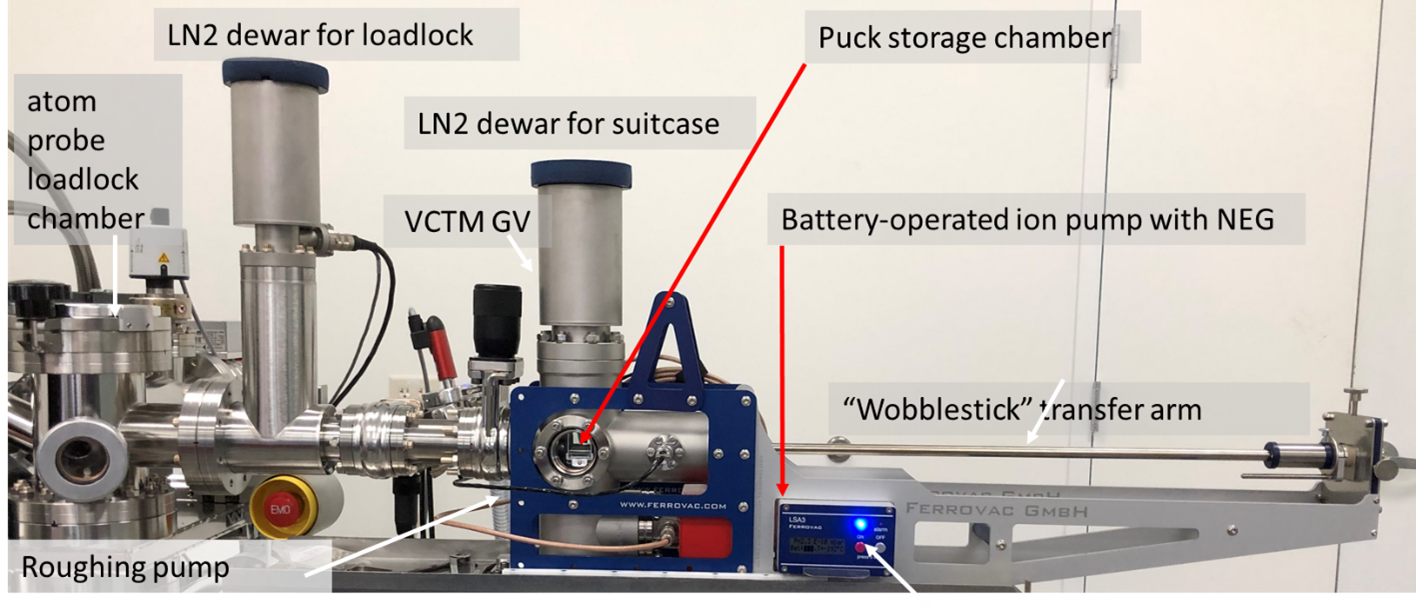
Figure 1: VCTM attached to a LEAP system
Keeping the sample cold from loadlock to analysis chamber required another bit of innovation. To do this, a special carrier puck called a cryo dock puck is pre-cooled in the analysis chamber at 25K. Once the VCTM is mounted to the LEAP, the cryo carrier puck can be brought up to the loadlock chamber into an insulated carousel position and the cold specimen puck can ride “piggyback” on the cryo dock puck until it reaches the cold analysis chamber.
The entire workflow is outlined in Figure 2:
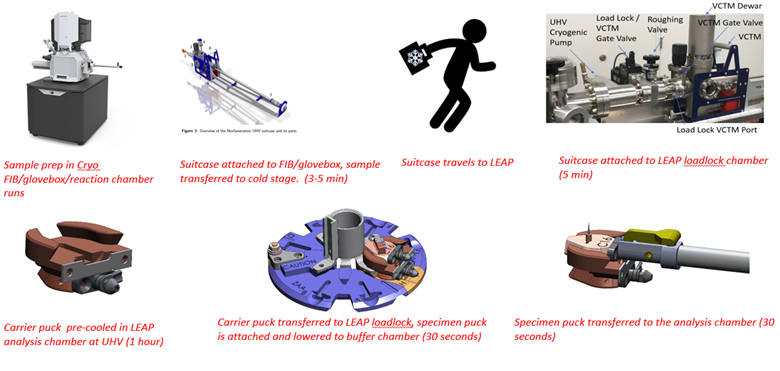
Figure 2: Cryo transfer workflow with VCTM
In addition to hardware, the acquisition control software (ACC) has a step by step wizard for each part of the process: Mounting the VCTM to the LEAP/Invizo; transferring the specimen puck to chamber; transferring a specimen into the VCTM; and unmounting the VCTM from the atom probe, making the process user friendly. As shown in Fig 2, the carousel has an insulated position that protects the specimen from warming during the path from loadlock to analysis chamber. This helps to eliminates “warm-up windows” where reactive species can move or react, or the specimen could melt if made of frozen liquids. Keeping the entire path cold and under UHV drastically minimizes the risk of sample frost, saving your time and specimens from potential disaster.
The promise of cryo extends beyond stabilizing species: it’s part of a broader move toward environmentally sensitive sample characterization. Imagine workflows that combine cryo-APT with in situ charging, targeted exposure, or operando states, enabling time-resolved snapshots of materials as they evolve. As hardware, workflows, and software keep advancing, we’ll be able to acquire APT data in increasingly realistic states, shrinking the gap between lab and application. And that is very cool, if you ask me.
References
[1] Holmes, N. P.; Roohani, I.; Entezari, A.; Guagliardo, P.; Mirkhalaf, M.; Lu, Z.; Chen, Y.-S.; Yang, L.; Dunstan, C. R.; Zreiqat, H.; Cairney, J. M. Discovering an Unknown Territory Using Atom Probe Tomography: Elemental Exchange at the Bioceramic Scaffold/Bone Tissue Interface. Acta Biomaterialia 2023, 162, 199–210. https://doi.org/10.1016/j.actbio.2023.02.039
[2] Perea, D. E.; Schreiber, D. K.; Ryan, J. V.; Wirth, M. G.; Deng, L.; Lu, X.; Du, J.; Vienna, J. D. Tomographic Mapping of the Nanoscale Water-Filled Pore Structure in Corroded Borosilicate Glass. npj Materials Degradation 2020, 4 (1), 1–7. https://doi.org/10.1038/s41529-020-0110-5
[3] Chen, Y.-S.; Liu, P.-Y.; Niu, R.; Devaraj, A.; Yen, H.-W.; Marceau, R. K. W.; Cairney, J. M. Atom Probe Tomography for the Observation of Hydrogen in Materials: A Review. Microscopy and Microanalysis 2023, 29 (1), 1–15. https://doi.org/10.1093/micmic/ozac005
[4] [1] Koç, Ö., Jenkins, B. M., Haley, J., Hofer, C., Meier, M. S., Jones, M. E., Harrison, R. W., Preuss, M., Moody, M. P., Grovenor, C. R. M., & Frankel, P. (2025). Cryogenic sample preparation: Comparative analysis of Ga+ and Xe+ FIB milling for TEM and APT examination of zirconium. Ultramicroscopy, 277, 114210. https://doi.org/10.1016/j.ultramic.2025.114210
[5] Cairney, J. M.; McCarroll, I.; Chen, Y.-S.; Eder, K.; Sato, T.; Liu, Z.; Rosenthal, A.; Wepf, R. Correlative UHV-Cryo Transfer Suite: Connecting Atom Probe, SEM-FIB, Transmission Electron Microscopy via an Environmentally-Controlled Glovebox. Microscopy and Microanalysis 2019, 25 (S2), 2494–2495. https://doi.org/10.1017/S1431927619013205
[6] Chen, Y.-S.; Griffith, M. J.; Cairney, J. M. Cryo Atom Probe: Freezing Atoms in Place for 3D Mapping. Nano Today 2021, 37, 101107. https://doi.org/10.1016/j.nantod.2021.101107
Authors: Katherine RICE