A Historic Exhibit at Penn State University
The Eberly College of Science at Pennsylvania State University proudly presents the Müller Collection, a new exhibit dedicated to the pioneers of atom probe tomography (APT).
This unique scientific heritage collection honors the legacy of Dr. Erwin Müller and Dr. John Panitz, whose innovations laid the foundation for atomic-scale imaging and materials characterization.
On display are several iconic scientific instruments, including Müller’s original field emission microscope and components from the first atom probe field ion microscope. Visitors can also view one of
the earliest Local Electrode Atom Probe (LEAP) systems, manufactured in 2003 (Fig. 1), offering a rare look at the evolution of APT instrumentation. The full collection of materials donated by Dr. Panitz can be seen here.
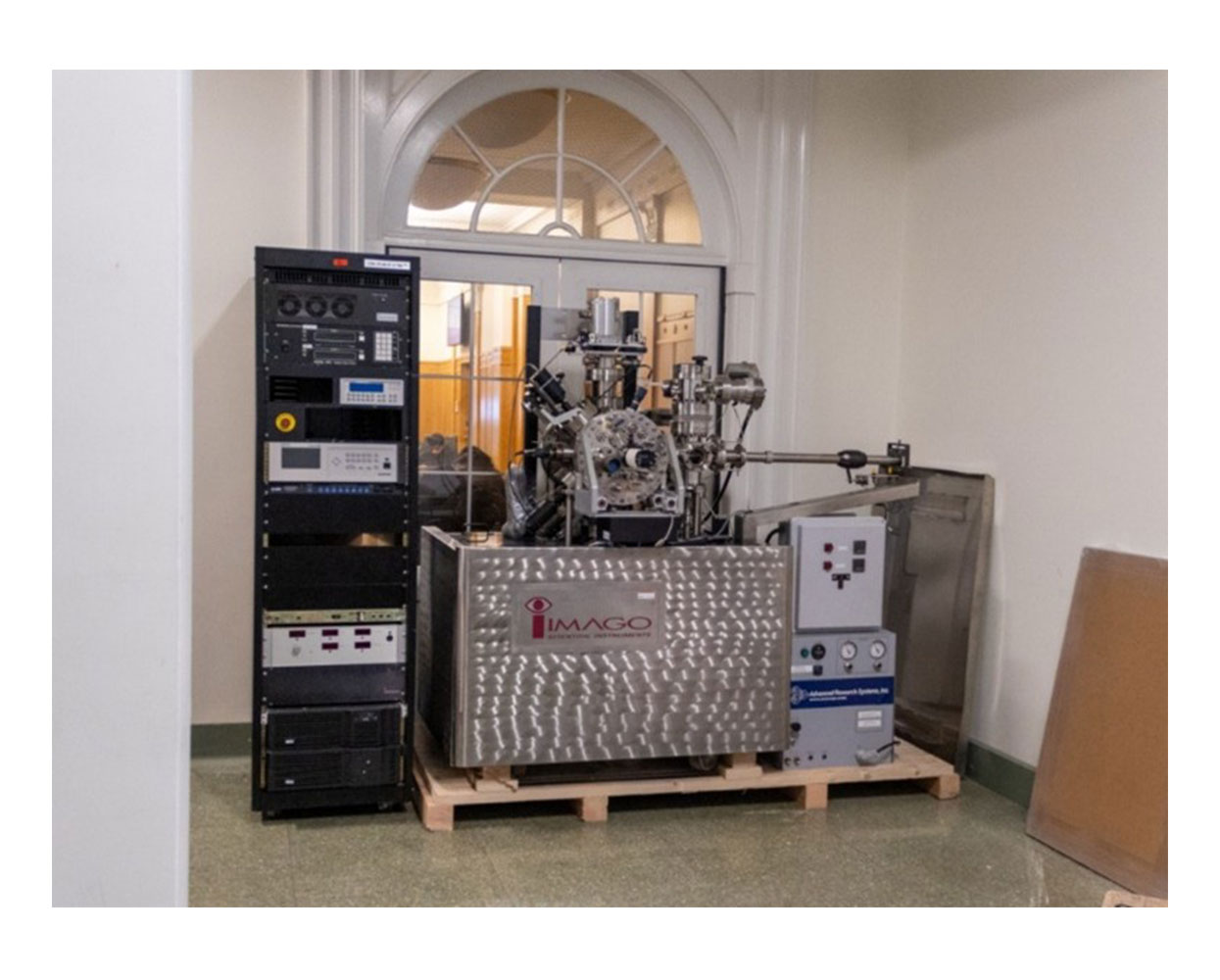
Fig.1: First LEAP, manufactured in 2003, now on display at the Eberly College of Science. Credit: Gail McCormick
The First Visualization of Atoms: A Scientific Milestone
In October 1955, physicist Erwin Müller and his graduate student Kanwar Bahadur achieved a historic breakthrough in field ion microscopy: they became the first scientists to visualize individual atoms.
This moment, famously marked by Müller’s exclamation “Atoms, ja, atoms!”, revolutionized the field of nanoscale imaging.
This year, we celebrate 70 years since this milestone, a pivotal moment in the history of microscopy and surface science.
John Panitz and the Birth of Modern Atom Probe Technology
A key figure in the advancement of APT, Dr. John Panitz refined the original atom probe design by introducing time-of-flight mass spectrometry.
This innovation enabled chemical identification and spatial localization of atoms, transforming APT into a powerful analytical technique for materials science, nanotechnology, and metallurgy.
The LEAP System: A Quantum LEAP in APT Capabilities
The exhibit also showcases the development of the LEAP system, a major advancement in atom probe technology that marked a turning point in the field.
By incorporating a local electrode and later introducing laser-assisted field evaporation, the LEAP system significantly expanded the range of materials and applications accessible to researchers in semiconductors, energy materials, and advanced alloys.
A Legacy of Scientific Curiosity and Technological Progress
From the first glimpse of atoms to today’s high-resolution 3D atom probes, the story of APT is one of scientific innovation, precision instrumentation, and interdisciplinary research.
The Müller Collection, now on display at the Osmond Laboratory, invites visitors to explore the origins and impact of a technique that continues to shape our understanding of materials at the atomic level.
References:
[1] ‘Atoms, ja, atoms’: Physics pioneer key to microscopy ‘revolution in resolution’ | Eberly College of Science: For more information.
[2] Jacoby, M. Visualizing Atoms; Revolutionary Technology Turns 50. Chemical & Engineering News 13–16 (2005).
[2] Bahadur, K. Experimental Investigation of Field Ion Emission. (The Pennsylvania State University, 1955)
[3] Panitz, J. A. The Atom Probe FIM. (Pennsylvania State University, 1969).
About the instrument:
 CAMECA's latest model 3D Atom Probe Microscope
CAMECA is a world leader in delivering breakthrough
Atomic Probe Tomography technology for research and industry. Current CAMECA APT solutions include the 6000 family — the
Invizo® 6000, the
LEAP 6000 XR™ — and the
EIKOS-UV™.
Authors: Katherine RICE