How Reactive Ion Beam Figuring Enhances Surface Quality Across Optical Materials
A recent publication by Hölzel et al. (2025) investigated the evolution of surface roughness during reactive ion beam figuring (RIBF) on three widely used optical materials: fused silica, Zerodur® and N-BK7®. The study focused on how the surface topography changes as material is progressively removed during the figuring process.
In this work, ion beam figuring was performed using an ECR plasma source. The experimental setup of the reactive ion beam figuring process is shown in figure 1. The authors carried out reactive ion beam etching on the different materials and analyzed the surfaces using several complementary techniques, including white light interferometry (WLI), atomic force microscopy (AFM), X-ray photoelectron spectroscopy (XPS) and ToF-SIMS.
The objective was to understand both the morphological evolution of the surface and the chemical modifications induced by the reactive process.

Figure 1: Experimental setup for reactive ion beam figuring with a schematic of the target surface geometry with an aperture of 16 mm and maximum depth of 5.6 µm.
The results show a material-dependent behaviour of the surface roughness. As illustrated in figure 6b, the rms roughness (Sq) decreases with increasing etching depth, following an approximately exponential trend. A rapid reduction is observed within the first micrometer of material removal, followed by a more gradual improvement at higher depths.
This behaviour highlights the deterministic nature of the RIBF process when properly cotrolled. In some cases, the roughness decreases exponentially with increasing etch depth, while temporary particle growth can occur due to the formation of reaction products. These particles, mainly containing sodium and fluorine, were found to be water-soluble and did not create a permanent masking effect.
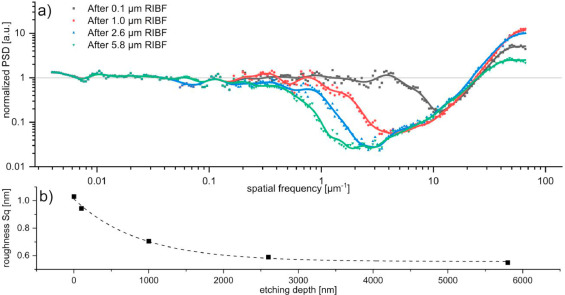
Figure 2: Normalized power spectral density distribution (a) of fused silica before and after reactive ion beam figuring to various depths and etching depth dependent Sq roughness (b) measured by AFM in a (30 × 30) µm area.
Overall, the study demonstrates that reactive ion beam figuring enables highly controlled material removal, smooth and repeatable removal profiles, and excellent surface quality after figuring, provided that the material-specific response is taken into account during the process.
These findings provide valuable insights into the mechanisms governing surface evolution during ion beam figuring and help define suitable process windows for high-precision optical manufacturing.
From research to industrial solutions
The performance reported in this study illustrates the advantages of stable, gridless plasma sources for precision figuring. CAMECA’s ECR ion source technology is designed to provide the same key benefits—stable beam operation, contamination-free processing, and repeatable material removal—supporting advanced optical finishing applications in both research and industrial environments.
References:
Hölzel, F., Bauer, J., & Arnold, T. (2025). Roughness evolution of fused silica, Zerodur® and N-BK7® in reactive ion beam figuring processes. Surfaces and Interfaces (Elsevier). https://doi.org/10.1016/j.surfin.2025.106769
About the CAMECA TES‑GO ECR Source
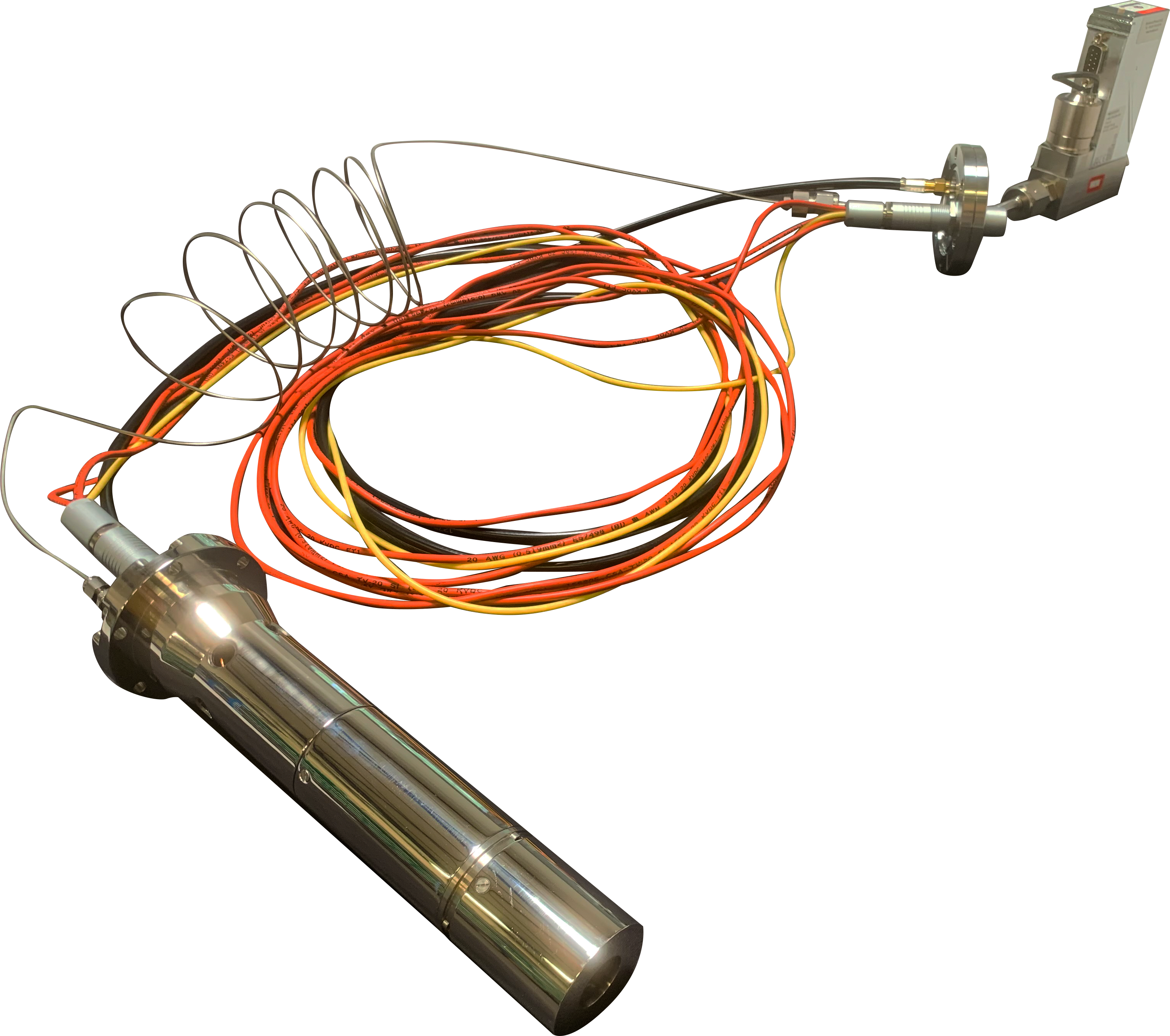
The TES‑GO is CAMECA’s next‑generation ECR ion source designed to deliver highly stable, griddless plasma beams optimized for advanced material processing and optical surface refinement. Its robust architecture provides the key benefits highlighted in the recent RIBF study—stable beam operation, contamination‑free processing, and repeatable material removal—making it ideally suited for high‑precision figuring workflows.
When applied to Ion Beam Figuring, TES‑GO enables extremely deterministic material removal while maintaining excellent surface quality. This positions the source as a powerful tool for demanding optical manufacturing tasks, from ultra‑smooth surface finishing to the correction of complex geometries used in next‑generation photonic, space, and high‑power laser systems.
Authors: Cyrielle Kamdem