The seventh iteration of the CAMECA Atom Probe Users’ Conference, held in Madison, Wisconsin at the Concourse Hotel, June 17 – 19 was a resounding success. This gathering brought together atom probe experts from over 15 countries and 60 companies worldwide, fostering a global exchange of knowledge and innovation. The conference hosted presentations by top APT users, and explored a wide range of topics, from “Quantifying Uncertainty in Atom Probe Composition Measurements” to “Color Palettes for Atom Probe Tomography Data.” The conference also featured an engaging poster session and productive breakout groups, where participants discussed the future of APT.
The conference offered two days of presentations, intensive discussions and networking opportunities. The first day was dedicated to various aspects of APT data analysis, starting with Andrew London from the United Kingdom Atomic Energy Authority, who offered deep insights into quantifying uncertainty in APT data. Following this, James Famelton from Brunel and Chih-Wei Sung from National Tsing Hua University presented innovative approaches to cluster analysis.
Afternoon topics highlighted newer APT instrumentation. Francois Vurpillot of Groupe de Physique Materiaux discussed the simultaneous pulsing mode (known as V+L) available on the LEAP 6000XR. Severin Jakob of Chalmers (Figure 1) further highlighted the extensive benefits of the deep UV laser and V+L mode in the LEAP 6000XR and used scripted acquisition to monitor oxygen deficiency in Chromia. AJ Breen from the University of Sydney provided an update on their use of the Invizo 6000; they reported more data, fewer fractures, and a wider field of view. A great success story!
The second day of the conference was a deep dive into specimen preparation. Both Petr Klimek of Tescan and Marc Maier of Thermo Fisher spoke about their products how they are suitable for APT specimen preparation. These presentations led to much discussion about optimal FIB-based specimen preparation. The day also featured a poster session (Figures 9 and 10) offering another knowledge-sharing opportunity to the event.
All presentations from the 2024 APT Users’ Conference can be viewed at our Thinkific page. Be sure to sign up to keep abreast of the latest advancements and expert discussions in APT.
The 2024 APT Users’ Conference wasn’t all work; it offered an opportunity for attendees to experience some of what Madison has to offer. A keynote speech was delivered by Dr. Kyle Cranmer of the University of Wisconsin-Madison, a noted expert on artificial intelligence (Figures 2 and 3). He explored the role of AI in analyzing atom probe data. Attendees enjoyed a tour of the Wisconsin State Capitol Building (Figures 4 and 5) and visited CAMECA’s APT Headquarters in neighboring Fitchburg, Wisconsin, where they were able to see the customer demo laboratory (Figures 6 and 7). CAMECA also hosted the traditional Women in Atom Probe Happy Hour fostering a vibrant community (Figure 8).
The APT Users’ Conference is a truly unique event, offering a dedicated platform for addressing the specific needs and interests of atom probe users, beyond just materials science topics. The 2024 Users’ Conference was especially significant, marking the first in-person gathering of the global APT community in Madison since 2019 due to the pandemic. It was a successful reunion filled with collaboration and innovation. CAMECA eagerly anticipates hosting the next exciting APT user meeting in 2026, promising even more opportunities for connection and scientific discoveries.
 Figure 1: Severin Jakob presents on LEAP 6000XR studies of chromium oxide

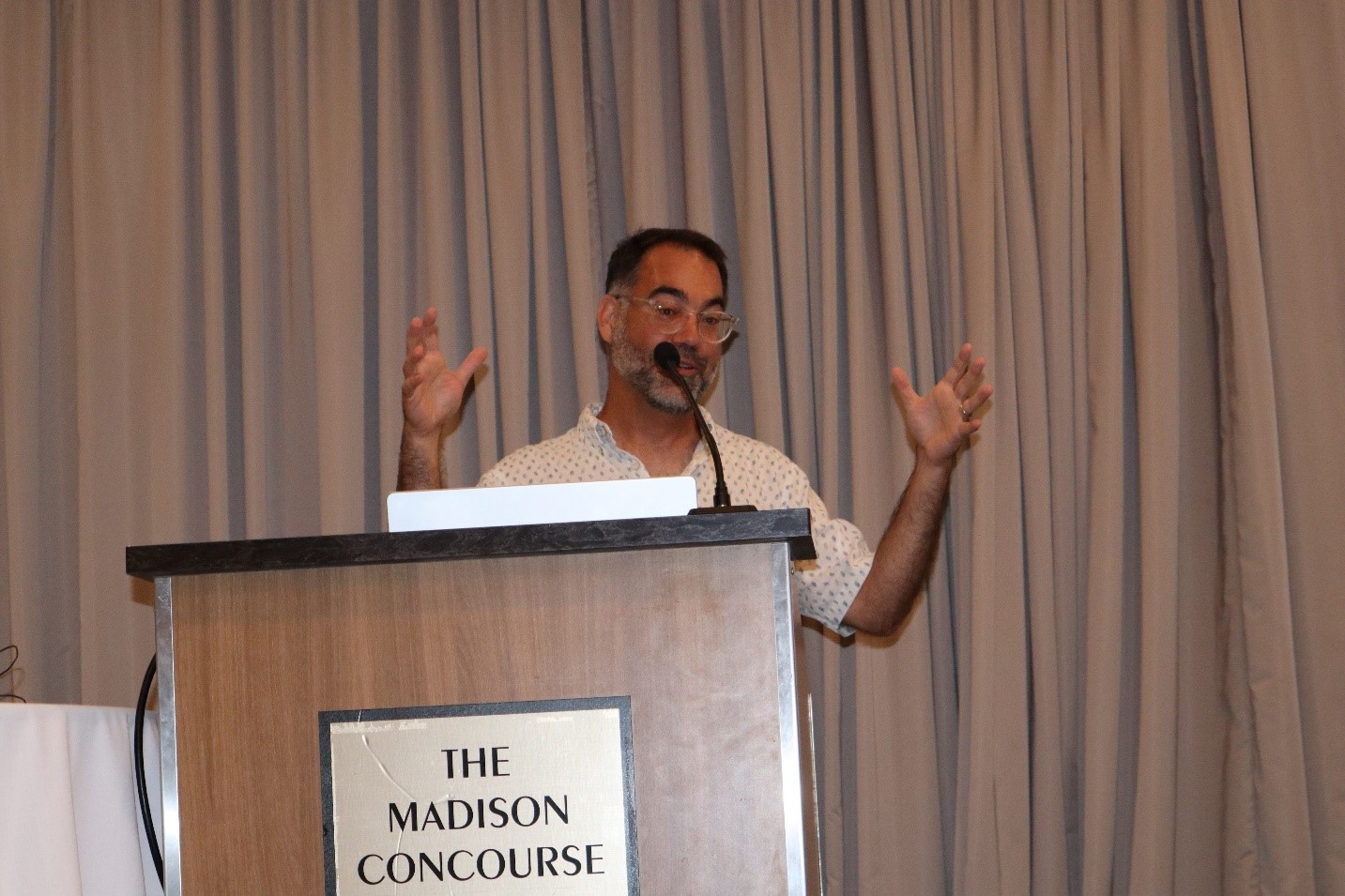
Figure 2/3: Professor Kyle Cramer talks about the potential of AI in science

Figure 3: the 5th Women in Atom Probe Happy Hour


Figure 4 and 5: inside and outside the Wisconsin Capitol.

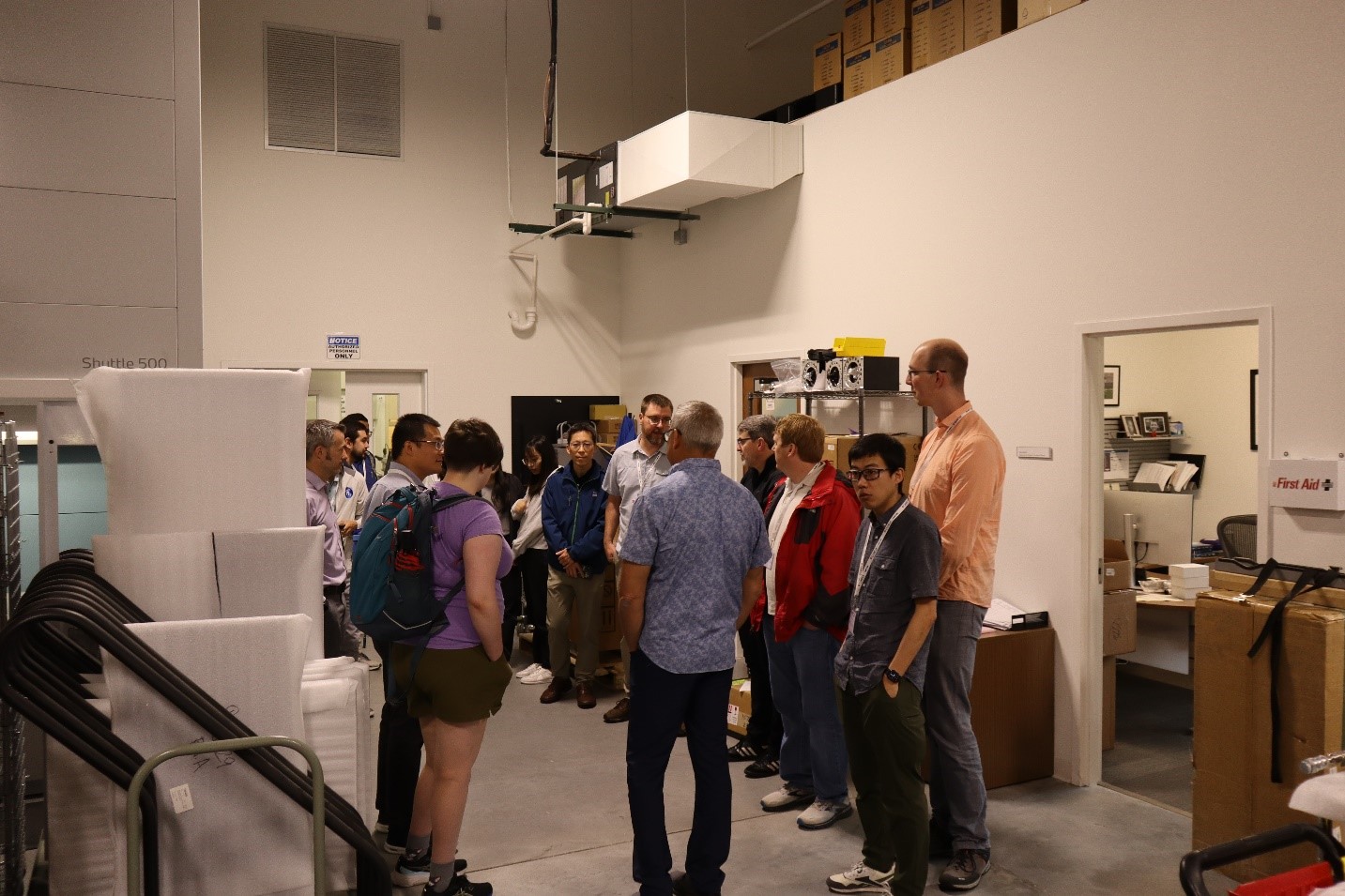
Figures 6 and 7. Group tour of CAMECA Madison

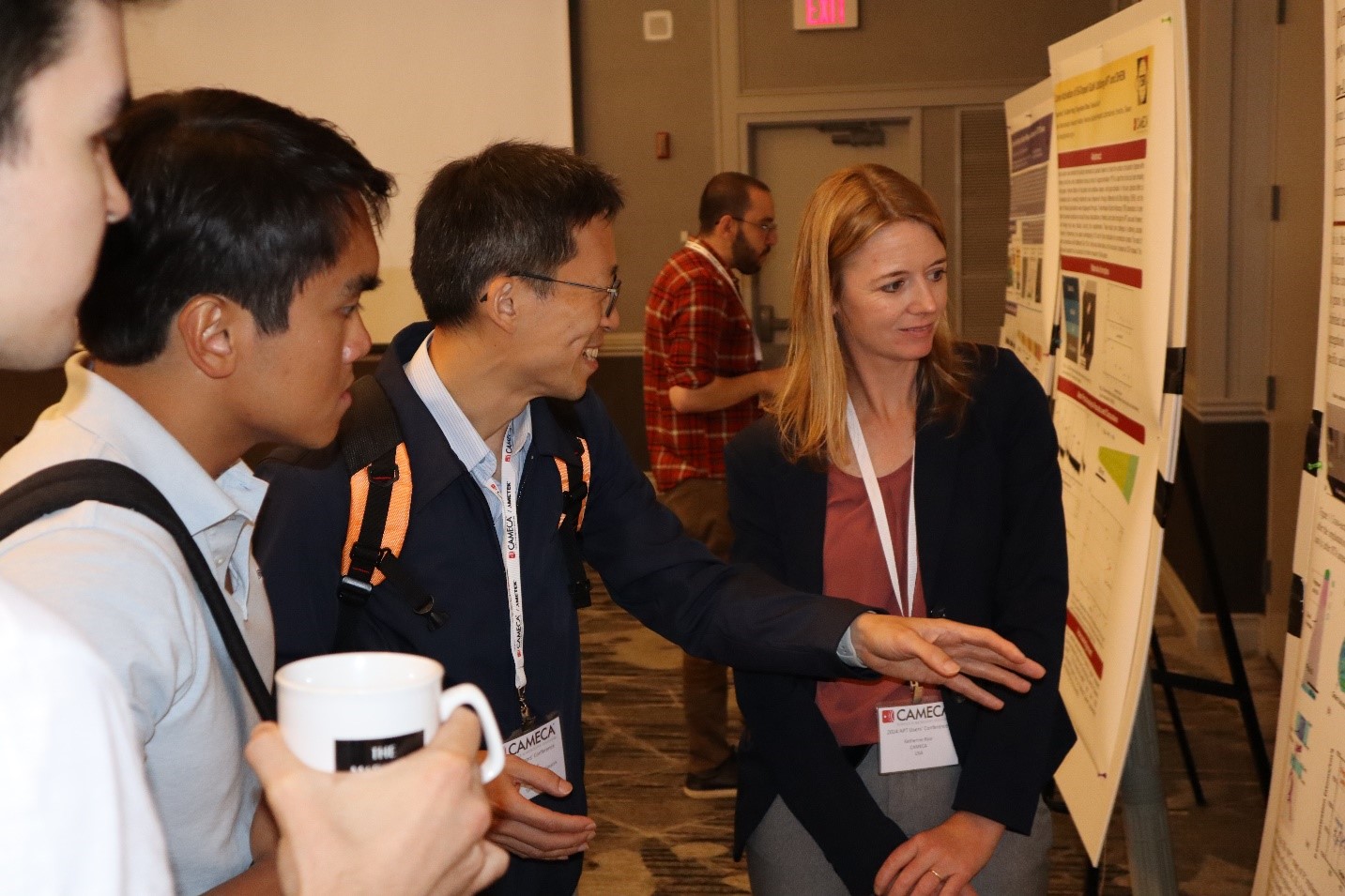
Figures 9 and 10: poster session
Authors: Katherine RICE (Applications Lab Manager)